
Moonprints Guide
Ask me about orders, shipping & styles.
Hello! How can I help you today?
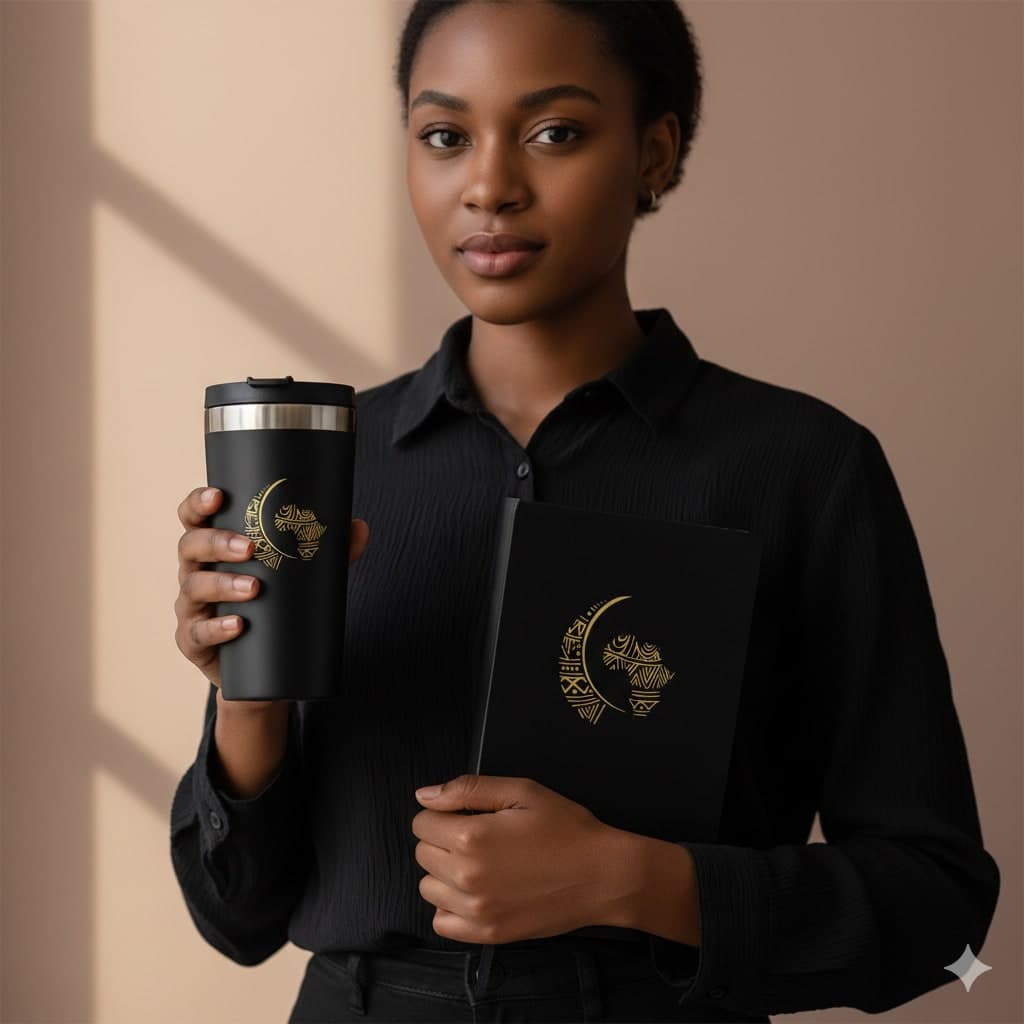
A good T-shirt, notebook, or tumbler will do one thing better than a billboard: it lives with your audience. It goes to the office, gets washed, gets photographed, and if you’ve done it right-sparks a conversation. That’s why a smart branded merchandise strategy is not an afterthought or a logo-slap. It’s storytelling you can touch.
This guide walks through why merch matters, how to build a strategy that’s tied to business outcomes, measurement frameworks that actually work, and practical steps (with checklists) to take you from brief to brilliant. At the end you’ll find a simple merch brief template CTA so you can start a project confidently.
People don’t collect things because objects are useful. They collect things because objects are meaningful. Branded merchandise is a physical ambassador for your story: it creates repeated brand exposure, emotional attachment, and social proof.
Quick reasons merch punches above its weight:
Longevity: unlike an ad that vanishes in 30 seconds, a quality notebook or tumbler stays in use for months or years.
Owned touchpoint: once you give someone merch, you own the relationship in their hands not an algorithm’s mercy.
Social currency: people love to show items that express identity. Your merch becomes wearable content and free promotion.
Utility = repeated exposure: practical items (tumblers, bags, notebooks) produce repeated brand impressions.
A common mistake: treating merch as an afterthought or a “freebie.” That’s like building a book and stapling the cover on at the last minute. Great merch starts with story, not with the cheapest supplier.
Before colors or quantities, answer these three questions. They’ll save you design debt and returns later.
Whose story are you telling?
The audience. Employees? Event attendees? Retail customers? Each has different needs and emotional triggers.
What role will the item play in that story?
Keepsakes, utility, status signal, or a promotional bridge to another action (like signing up for a newsletter).
What behavior should it drive?
Increase retention, acquire referrals, boost event attendance, or convert trial users to paid customers.
When you answer these, product choices become obvious. If your goal is employee appreciation, pick a premium, durable notebook with personalization. If your goal is discoverability at events, pick eye-catching bags or tumblers people take home.
Below is a short cheat-sheet to help you choose the right merch for the job.
Brand awareness / acquisition → Tote bags, caps, and stickers (shareable and visible).
Repeat engagement & retention → Notebooks, tumblers, and apparel (used daily).
Premium gifting / VIPs → Leatherette journals, branded wine tumblers, boxed kits.
Sustainability messaging → Eco-base tumblers, recycled paper notebooks, upcycled Vikapu.
Event activation → Limited-edition items and collector’s merch with numbered runs.
Don’t try to win every objective with one SKU. A small, well-curated kit often beats a warehouse of mismatched freebies.
Situation: A local food market wanted to increase customer return visits and social sharing without raising ad spend.
Strategy: Moonprints-Africa designed a limited-run Afrikan Vikapu tote with a bold, hand-dyed pattern and a QR code inside that offered a “first-to-know” discount for next market day.
Execution: 500 totes sold at the market stall at a 40% higher margin than average merch; each tote included care tips and the QR incentive.
Outcome: Over 60% of buyers used the QR discount within 6 weeks; social posts with the tote reached 12k impressions locally. The tote functioned as a wearable coupon and conversation starter—turning customers into repeat visitors.
Note: the above is an anonymized composite that reflects typical outcomes when story+utility+CTA align. Your results will vary by audience and campaign design.
Measuring merch isn’t voodoo. Match each KPI to your objective.
Awareness: Impressions from social UGC, event visibility, and hashtag use. Track with UTM links and social listening.
Engagement: Time on site from merch-driven QR or landing pages, email signups from included QR codes, and newsletter conversions.
Activation: Promo codes redeemed (unique codes per batch), trial signups.
Retention / LTV impact: Repeat purchase rates for recipients vs. controls (use coupon redemptions to track cohorts).
ROI: (Revenue attributable to merch − Cost of merch) / Cost of merch. For B2B, include softer returns like partnership opportunities and press mentions.
A pro tip: include a unique, single-use code or QR on a portion of items to measure conversion cleanly. It’s cheap, elegant, and separates vanity metrics from real outcomes.
Design is storytelling compressed. Use these micro-decisions to encode meaning in the artifact.
Material choice = brand value. Bamboo or recycled PET tells sustainability. Leatherette communicates premium. Handwoven fibers communicate local craft.
Finish & touch: debossing says permanence; foil stamping says celebration; skin-feel coating implies tactile quality and frequent use.
Color & pattern: bold brand colors for visibility; muted palettes for premium positioning. Consider regionally meaningful patterns (e.g., local weave motifs) to build cultural resonance.
Copy & microcopy: a 10-word microstory printed inside a notebook or under a lid can surprise and delight. Don’t waste space make the line meaningful.
Personalization: names, initials, or limited run numbers increase perceived value and reduce discard rates.
Remember: an item that feels cheap sends a story too “we cut corners.” It’s always better to invest in fewer high-quality pieces than many low-quality ones.
How you deploy merch is as important as the item itself.
Timed exclusivity: “limited run” language increases urgency and social shares.
Seeding & influencers: give to local partners, not just influencers give to people who will use it in relevant contexts (e.g., café owners for branded tumblers).
Bundles & cross-promotions: pair a notebook with a sample pack or discount on services.
User-generated content campaigns: incentivize photos with a simple hashtag and monthly prize. Feature winners on your site.
Employee advocacy: give employees premium kits and encourage them to share unfiltered content employees are high-trust storytellers.
Define objective & audience (use the 3-question Story-First Framework).
Pick item(s) and material (match to objective).
Design & copy (one-liner microstory + brand marks).
Prototype & approve (request a physical sample).
Production & QA (inspect colors, finishes, and quantities).
Deployment plan (who gets it, when, and where).
Measure & iterate (track codes/QRs and collect UGC).
Pitfall: “I want everything branded.”
Fix: Prioritize pick one or two hero items per campaign to maximize impact.
Pitfall: “We’ll save by choosing the cheapest supplier.”
Fix: Evaluate total cost of ownership: returns, replacements, and brand damage often offset upfront savings.
Pitfall: “We’ll measure later.”
Fix: Design measurement into the product (unique codes, QC samples, and tracking plan).
Pitfall: “One-size-fits-all.”
Fix: Segment your audience and tailor the story: employees vs. customers need different merch variables.
The “Story in the Lid” campaign: print a 10-word story inside a tumbler lid and invite customers to share their own for a chance to be featured.
Limited-run artist collaborations: commission a local artist to design a pattern for 200 Vikapu totes. Number each piece. Sell/award them at a launch event.
QR-driven experiences: a sticker inside a notebook directs to an ephemeral landing page with behind-the-scenes video and a special offer.
Community co-creation: run a contest where customers vote on the next notebook cover. Voting participants receive a discount code.
Humor helps. A witty microcopy “Because your coffee deserves better company” can make a tumbler feel human.
We combine local craft expertise with modern print tech to create merch that performs. If you need help:
We can run a one-off pilot (small batch sample) to test your market.
We offer a Merch Brief review service to optimize your specs.
We provide measurement templates and UGC campaign playbooks to maximize ROI.
Start by filling our quick Merch Brief form so we can recommend product options and ballpark pricing.
Published in Brand Stories