Moonprints Guide
Ask me about orders, shipping & styles.
Hello! How can I help you today?
“People kept asking where we got the bag. They didn’t stop at the stall they came back the next week.” Melisa Market Manager
This is a practical, behind-the-scenes look at one of our favorite projects: how a story-first approach to a simple market bag the Afrikan Vikapu became a measurable growth lever for a local market brand. (Note: the figures below are from an anonymized composite based on Moonprints-Africa projects to protect client confidentiality while showing real tactics that work.)
[Client] is a popular local food market with an excellent food offering but a classic modern problem: many first-time visitors did not return the following month, and social sharing was inconsistent. They’d tried flyers and social ads, but the conversions and long-term visibility weren’t matching the ad spend.
Objective: increase repeat visits and create a tangible, on-the-ground brand presence that drives word-of-mouth and measurable sales uplift without a long ad cycle.
Key constraints:
Modest marketing budget.
Need for a product that felt authentically local, not a mass-produced giveaway.
Short lead-time before peak market season.
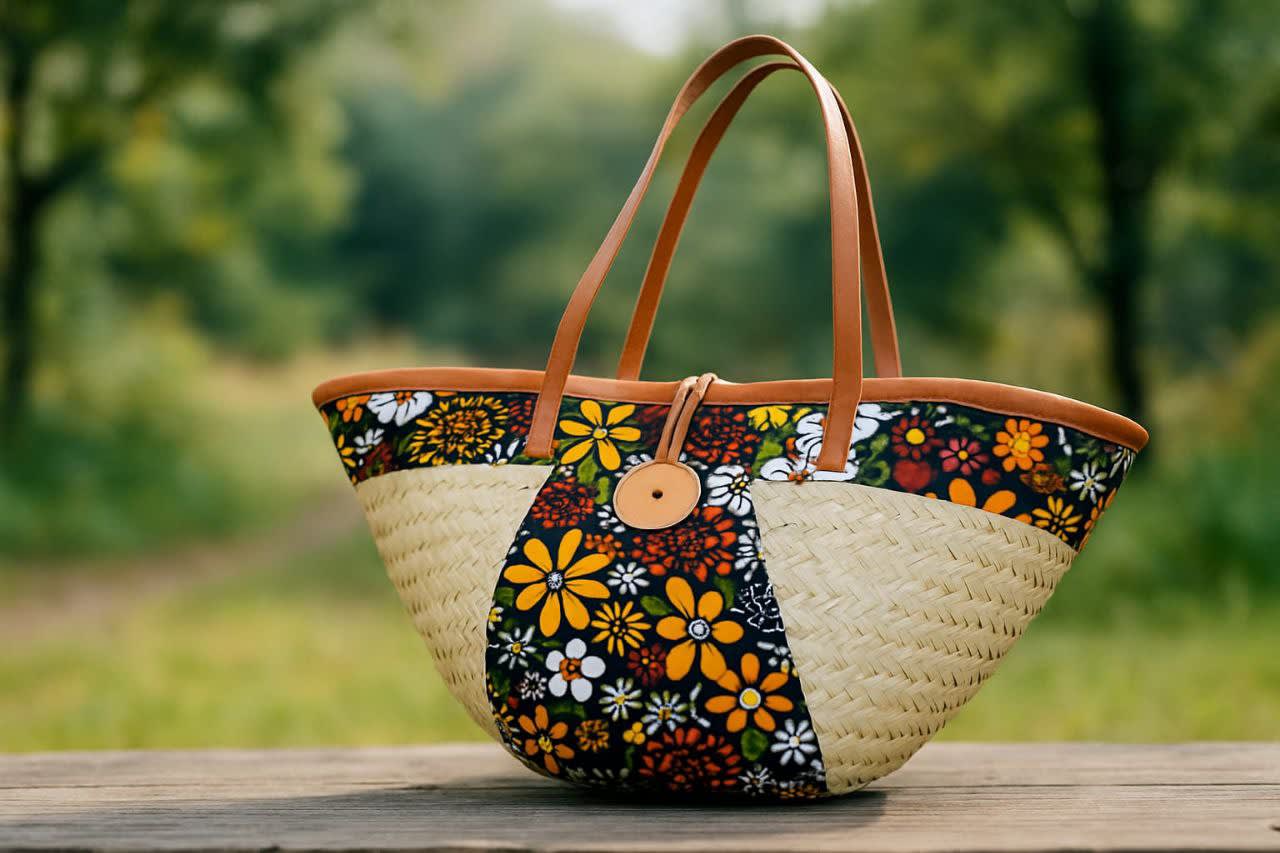
We proposed a limited-run Afrikan Vikapu — a handwoven market bag made with locally sourced fibers, featuring a bold hand-dyed band and a simple on-label activation: a QR code printed inside the bag that unlocked a “first-to-know” discount for the next market day.
Why this worked:
Utility + visibility: a sturdy tote is used repeatedly and seen in public.
Cultural resonance: the handwoven aesthetic tied the bag to local craft and the market’s identity.
Measurement built-in: the QR code created an immediate tracking mechanism to tie bag distribution to behavior.
Scarcity & pride: “limited run” messaging increased perceived value and social sharing.
Tactics we executed:
Design & story microcopy. A ten-word micro-story was printed under the inner rim: “Take this home. Tell a friend. Come for the food.” It became a small emotional nudge.
Hand-dyed accent band. We used a local dye technique to create visual distinctiveness — each bag looked artisanal, not factory-made.
QR activation. Each bag included a single-use QR landing page URL that offered a time-limited discount. The landing page captured emails and tracked redemptions.
Limited run + pricing. We produced 500 bags and sold them at the stall for a modest premium (40% above typical merch markup), positioning them as both a souvenir and a practical shopping bag.
Seeding & staff advocacy. Stall staff and a handful of well-known vendors were given demonstration bags to use for a week prior to launch, creating organic visibility.
Brief to design: 3 days using our Merch Brief to lock objectives and audience.
Sample & approval: 8 days prototype sample produced and approved.
Production: 12 days artisan weavers completed 500 units.
Deployment: launch at the weekend market following completion.
Because we matched material choice to the campaign timeline and used local artisans, lead times were short and revisions were minimal. The physical sample avoided costly surprises.
Metrics collected over the 6-week campaign window:
Units sold: 500 (entire run sold within two market weekends).
QR redemptions: 60% of bag buyers scanned and used the QR-discount within six weeks.
Sales uplift: Market stall sales from bag owners increased by 28% in the four weeks after purchase versus the four weeks before (tracked via vendor receipts and QR-linked offers).
Social reach: organic posts featuring the bag generated ~12,000 local impressions across Instagram and Facebook (vendor & customer posts combined).
Margin: The produced run returned a 40% higher margin per item compared to the market’s usual merch items (after materials and labor).
Repeat visits: Customers who redeemed the QR were 32% more likely to return within 30 days than non-bag buyers (measured using email follow-ups and vendor redemption logs).
How we measured: the unique QR + redemption landing page tied purchases to behavior, while vendors reported daily receipts that allowed comparison of sales before and after bag distribution. We also tracked UGC through a campaign hashtag and basic social listening.
“I use it every week it’s sturdy and people always stop me to ask where it’s from.” Market shopper
“The QR code was clever I showed it to a friend and we both used the discount the next weekend.” Bag buyer
“[Client] Market Manager: “The bags were conversation starters. We didn’t just sell merch we created a reason for people to come back.”
Build measurement into the artifact. QR codes, unique codes, or individualized emails provide clean attribution.
Make design meaningful, not decorative. Incorporate local craft cues to increase emotional value and reduce discard rates.
Limit runs to create scarcity. Smaller, well-marketed editions create urgency and social sharing.
Seed the product ahead of launch. Give it to people who will use it in public contexts (vendors, staff, partners).
Price strategically. A modest premium communicates quality and helps cover artisan costs while preserving perceived value.
Choose a utility-first item (bag, tumbler, notebook).
Add a measurable activation (QR, single-use promo code).
Use limited-run language and number the batch if possible.
Prototype before ordering bulk.
Seed to advocates and record baseline sales to measure uplift.
If you’d like a custom Afrikan Vikapu or a similar campaign kit, we can help you design the concept, run a pilot, and measure outcomes with simple, built-in tracking.
Published in Brand Stories